
What is a Certificate of Analysis (COA)?
A Certificate of Analysis (COA) is an official laboratory document that reports the results of testing performed on a specific batch of product. In the peptide industry, COAs typically report on purity, identity, and sometimes additional safety parameters like endotoxin levels or heavy metal content.
A legitimate COA from a recognized third-party laboratory provides independent verification that a product contains what the vendor claims — at the stated purity level. This is fundamentally different from in-house testing, which lacks the independence required for objective verification.
The most widely recognized independent testing laboratory within the peptide community is Janoshik Analytical, which has established itself as the de facto standard for third-party peptide verification among international vendors and researchers.
Anatomy of a Janoshik Test Report
Below is a sample Janoshik Analytical test report. Customer/brand identifying information has been redacted to respect privacy — the layout and structure shown represents what a legitimate, verifiable test result looks like.
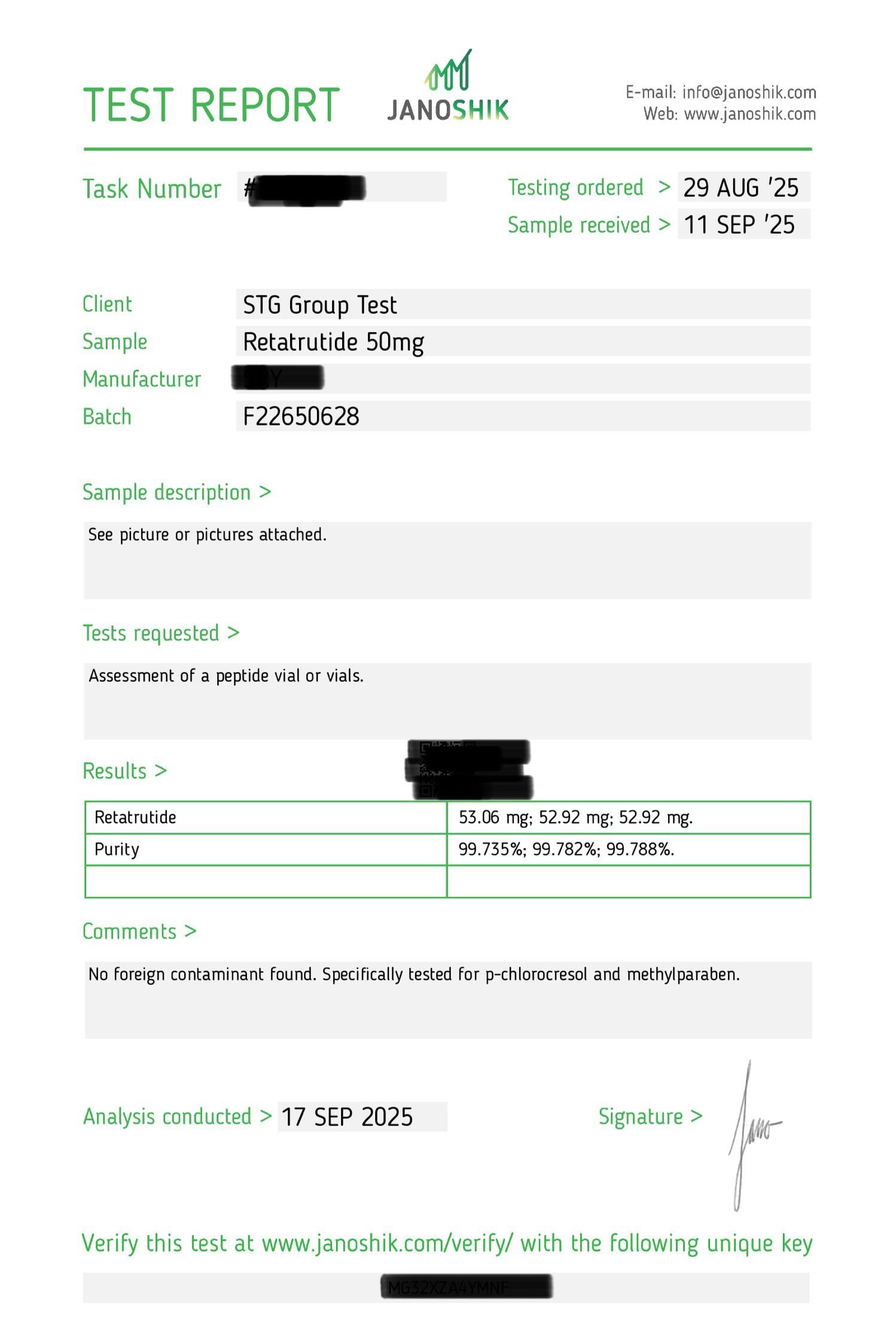
Sample Janoshik test report. Client/brand fields redacted for privacy. Structure shown is representative of authentic reports.
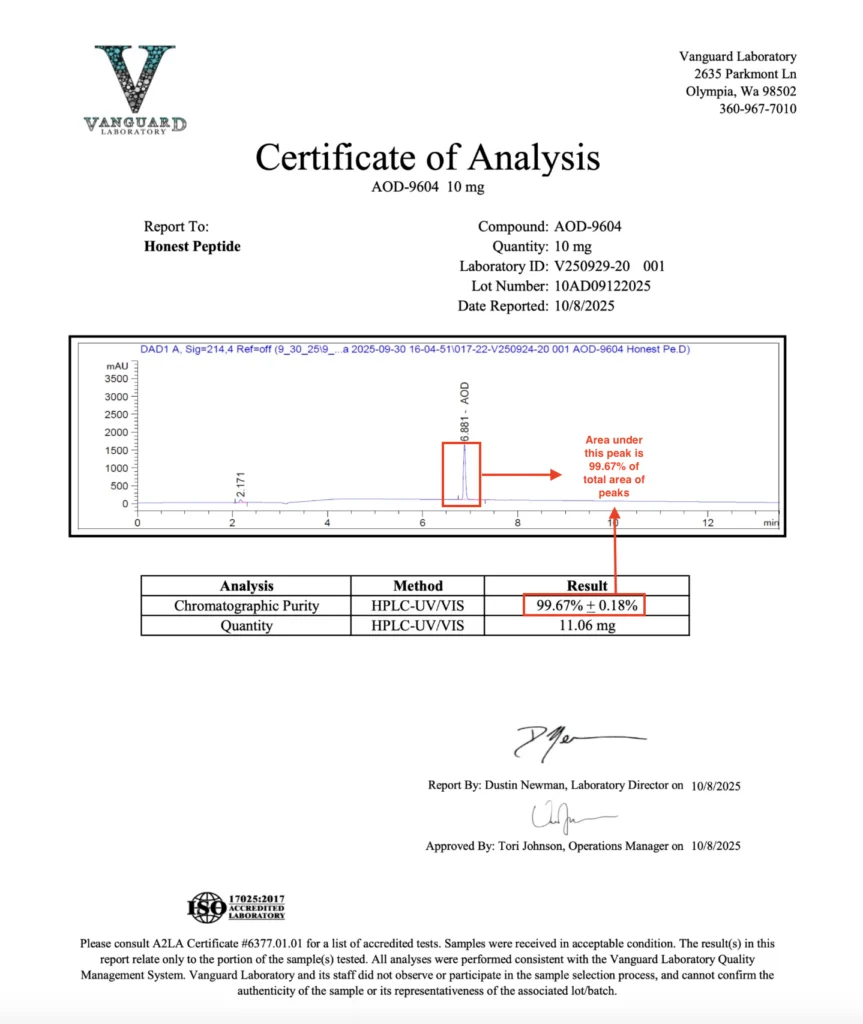
Annotated COA example showing key sections that researchers should verify when reviewing test documentation.
How to Read a Peptide COA: Key Sections
Task/Report Number
CriticalA unique identifier assigned by the laboratory. This number is used for verification and can be checked against the lab's database to confirm authenticity.
Sample Information
CriticalIdentifies the compound tested, the batch/lot number, and the quantity submitted. This should match what the vendor claims to sell.
Testing Method (HPLC)
CriticalHigh-Performance Liquid Chromatography (HPLC) is the standard method for peptide purity analysis. The chromatogram shows peaks representing the compound and any impurities.
Purity Result
CriticalExpressed as a percentage (e.g., 99.2%). This represents the proportion of the sample that is the intended compound vs. impurities. Higher is better — most quality vendors achieve 98%+ purity.
Quantity/Content Result
ImportantReports the actual amount of active compound present (e.g., '11.08 mg' in a vial labeled '10 mg'). Results meeting or exceeding labeled amounts indicate proper dosing.
Analysis Date & Signatures
ImportantThe date testing was conducted and signatures of the laboratory director and operations manager. These confirm the report was officially issued.
Verification Key
CriticalA unique alphanumeric code at the bottom of Janoshik reports that allows anyone to independently verify the report's authenticity through janoshik.com/verify.
How to Verify a Janoshik Report
Every authentic Janoshik report includes a unique verification key that can be independently checked. Follow these steps:
- 1Locate the verification key at the bottom of the test report (alphanumeric string)
- 2Navigate to janoshik.com/verify in your browser
- 3Enter the verification key exactly as printed on the report
- 4The system will confirm whether the report is authentic and display the original results
- 5Compare the displayed results against the report provided by the vendor — they must match exactly
Red Flags: Signs of Fake or Manipulated COAs
Legitimate Janoshik reports always include a verifiable unique key
Vendors with real reports have no reason to provide unreadable copies
Every legitimate test is tied to a specific batch/lot number
Official reports carry director and operations manager signatures
If the key doesn't verify on janoshik.com, the report is fraudulent
Test dates significantly predating or postdating product availability
Fabricated reports often use incorrect formatting or wrong logos
Legitimate vendors have no reason to withhold testing documentation
Understanding Purity Percentages
| Purity Range | Assessment | Notes |
|---|---|---|
| 99%+ | Exceptional | Research-grade. Minimal impurities. |
| 98–99% | Excellent | Standard for quality vendors. Expected range. |
| 95–98% | Acceptable | Adequate for most applications. |
| 90–95% | Below Average | Higher impurity content. Investigate further. |
| Below 90% | Concerning | Significant impurities. Quality concerns. |
Disclaimer: This guide is provided for educational purposes only. PeptideIndex.ca is an independent resource and does not represent Janoshik Analytical or any testing laboratory. Sample reports shown are for illustrative purposes with identifying information redacted. Always verify testing documentation independently through official laboratory channels.